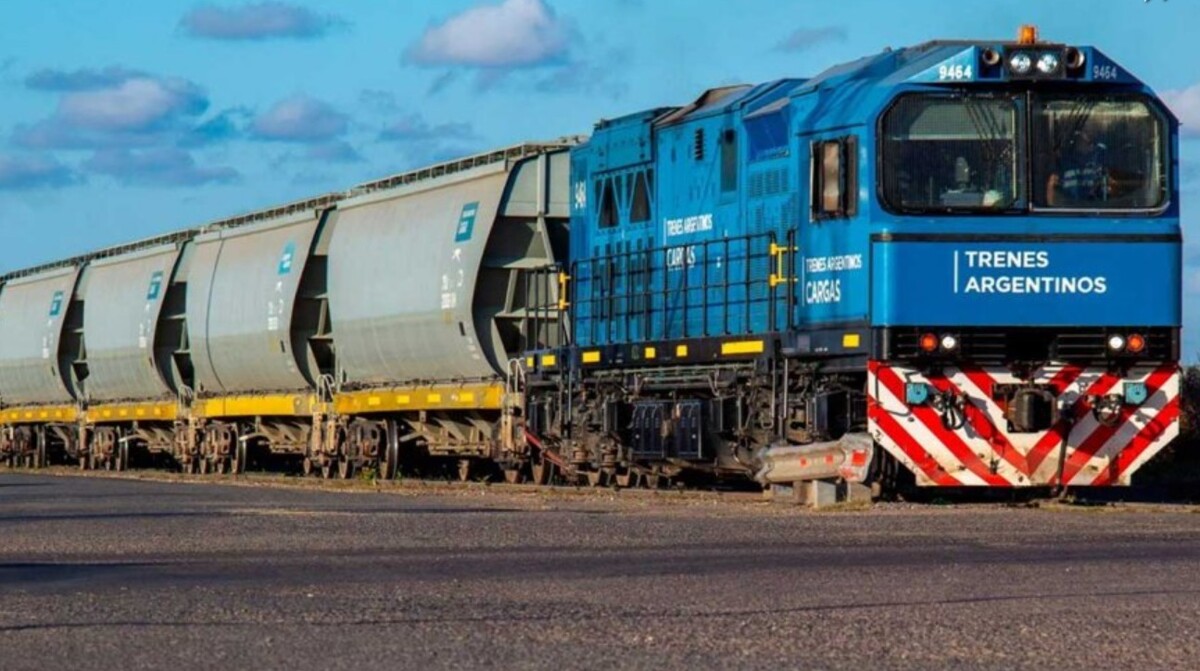
The government is preparing to carry out the first privatization of the Milei era by completely exiting Belgrano Cargas y Logística S.A., the state-owned company that operates over 7,600 kilometers of tracks across 17 provinces. The timeline being managed by the Ministry of Economy foresees the bidding process extending until the end of the first quarter of 2026, when final offers would be received. In parallel, the government acknowledges the political sensitivity of the tender following the setback with the Trunk Navigable Waterway, whose first tender was annulled amidst cross-accusations. Based on this, the Ministry of Economy and the Public Companies Transformation Agency (ATEP) have advanced in a detailed report that defined the process modality: public auction of rolling stock, concession of tracks and adjacent real estate through public works contracts, and concession of use of railway workshops. The operation will not be carried out through a single tender document, but through several simultaneous calls. Once the concession and sale contracts are awarded and perfected, the dissolution and liquidation of the state-owned company is scheduled to begin. The magnitude of the assets at stake explains the strong business interest. From the mining sector, international groups – including the British Rio Tinto – are eyeing the branches that connect lithium, copper, and other critical mineral deposits with logistics and border nodes. In recent weeks, a third heavyweight actor has emerged: Grupo México Transportes (GMXT), which operates the main freight railroads in Mexico in the region and has a presence in the United States. In the Casa Rosada, they take for granted that the tender notices will be published in the Official Bulletin in December, under a “vertical disintegration” model that will fragment the railway cargo operation by business units. The scheme was enabled by Decree 67/2025, which authorized the total privatization of the company and set as a central criterion the separation between infrastructure, rolling stock, and workshops. For the government, privatization is a central piece of the state reform; for critics and opponents, it is the cession of a strategic asset to concentrated groups. Although Belgrano Cargas does not currently have a direct route to Neuquén, the government is discussing alternatives so that, in a second phase, the cargo network can converge with other corridors and allow for the transport of key inputs, such as fracking sand, without further overloading already deteriorated road routes. The model aims for an open-access system: the track concessionaires will be obliged to allow the circulation of all operators that meet the technical and commercial conditions. In the ruling coalition, they highlight that the objective is to avoid both the state monopoly and a concentrated private monopoly, as occurred in the nineties. For this reason, the ATEP and the team led by Diego Chaher are working on the “fine print” together with the president of Belgrano Cargas, Alejandro Núñez, a man close to presidential advisor Santiago Caputo. The proceeds from the auction of locomotives and cars will be destined for a specific trust fund to finance works on the granted tracks, while the land and railway infrastructure will remain the property of the national state. On the agribusiness side, a pool of major grain companies led by Aceitera General Deheza (AGD), along with ACA, Bunge, Cargill, COFCO, and Louis Dreyfus, has consolidated, which sees the Belgrano Line and part of the San Martín as a key tool to lower freight costs from the NOA and north-center to the ports.
"El nuevo esquema, sostienen en el oficialismo, debería permitir planificar inversiones de largo plazo coordinadas entre el Estado, concesionarios y usuarios." — according to sources in the ruling coalition.